UPTR®
UPTR® is the solution to manage Linux repository LifeCycles and can be integrated easily into existing DevOps strategies.

UPTR® Features

Modern and fast Web-UI
UPTR® comes with a modern and fast webinterface based on Google's Angular framework.
System Installation & Provisioning
UPTR® is able to install frequently used Linux distributions on Hardware and common Virtualization Environments.
System Management
Manage all clients easily by using templates, static or dynamic groups, VNC connections, powerfull search- and filter tools and more.
Repository management
Choose from over 200 preconfigured Linux repositories, add your customized repositories and manage them within collections and self-defined lifecycles.
Package, Patch & Errata Management
UPTR® provides a browsable package / errata manager and a clear patch management mechanism.
Configuration Management with Ansible
UPTR® includes embedded Ansible support, an online playbook editor and provides a function to collect and store Ansible facts from clients.
IP Address Management
Integrated IPAM that provides subnet declaration and IP utilization. DNS and DHCP management support.
User management
User management enables administrators to grant access, manage user access and control user accounts.
Task Manager
Single point of view to manage all tasks - including a powerful scheduler.Modern and fast Web-UI⬆
UPTR® comes with a modern and fast webinterface based on Google's Angular framework.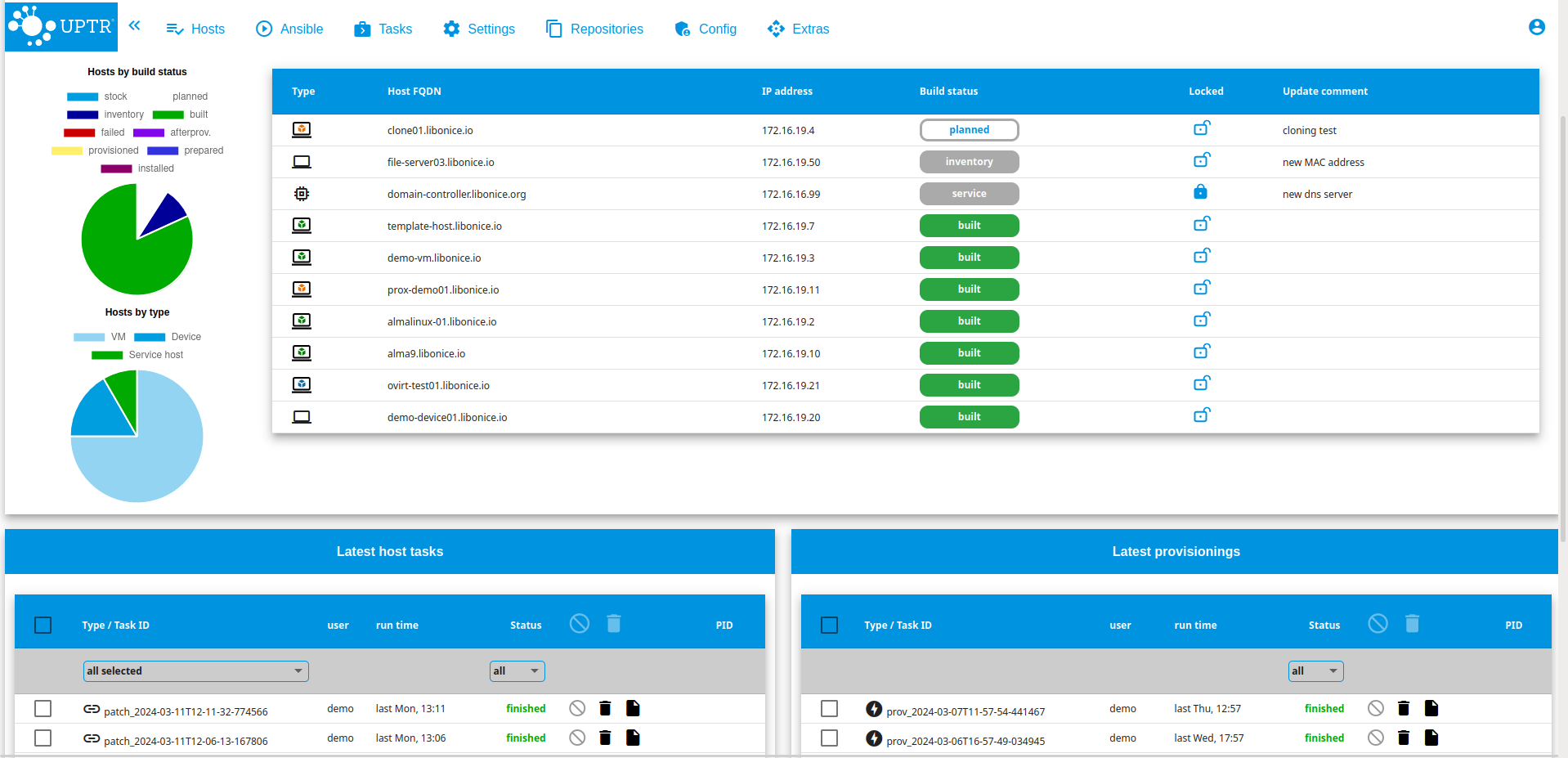
System Installation & Provisioning⬆
UPTR® is able to install frequently used Linux distributions on Hardware and common Virtualization Environments.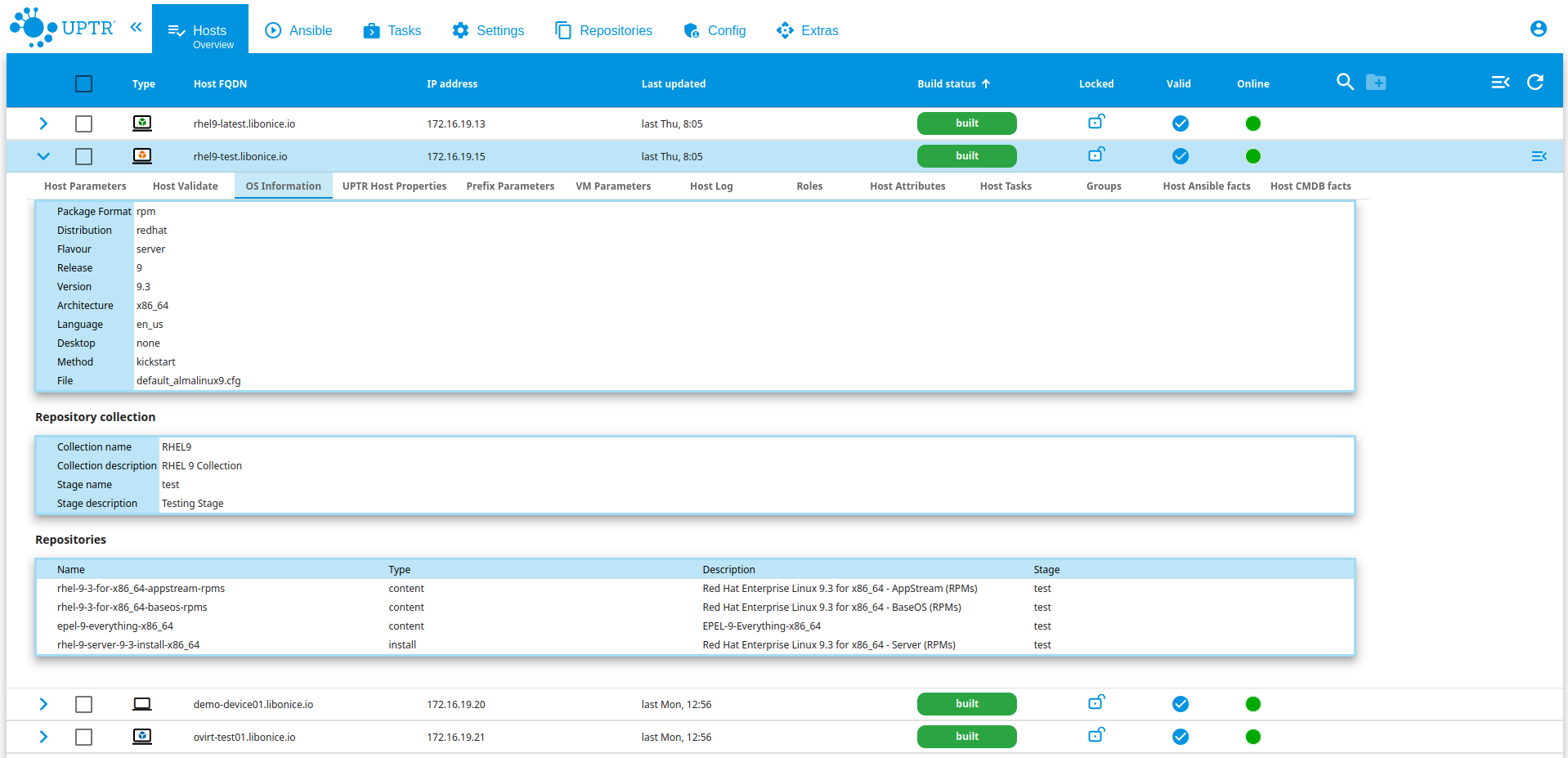
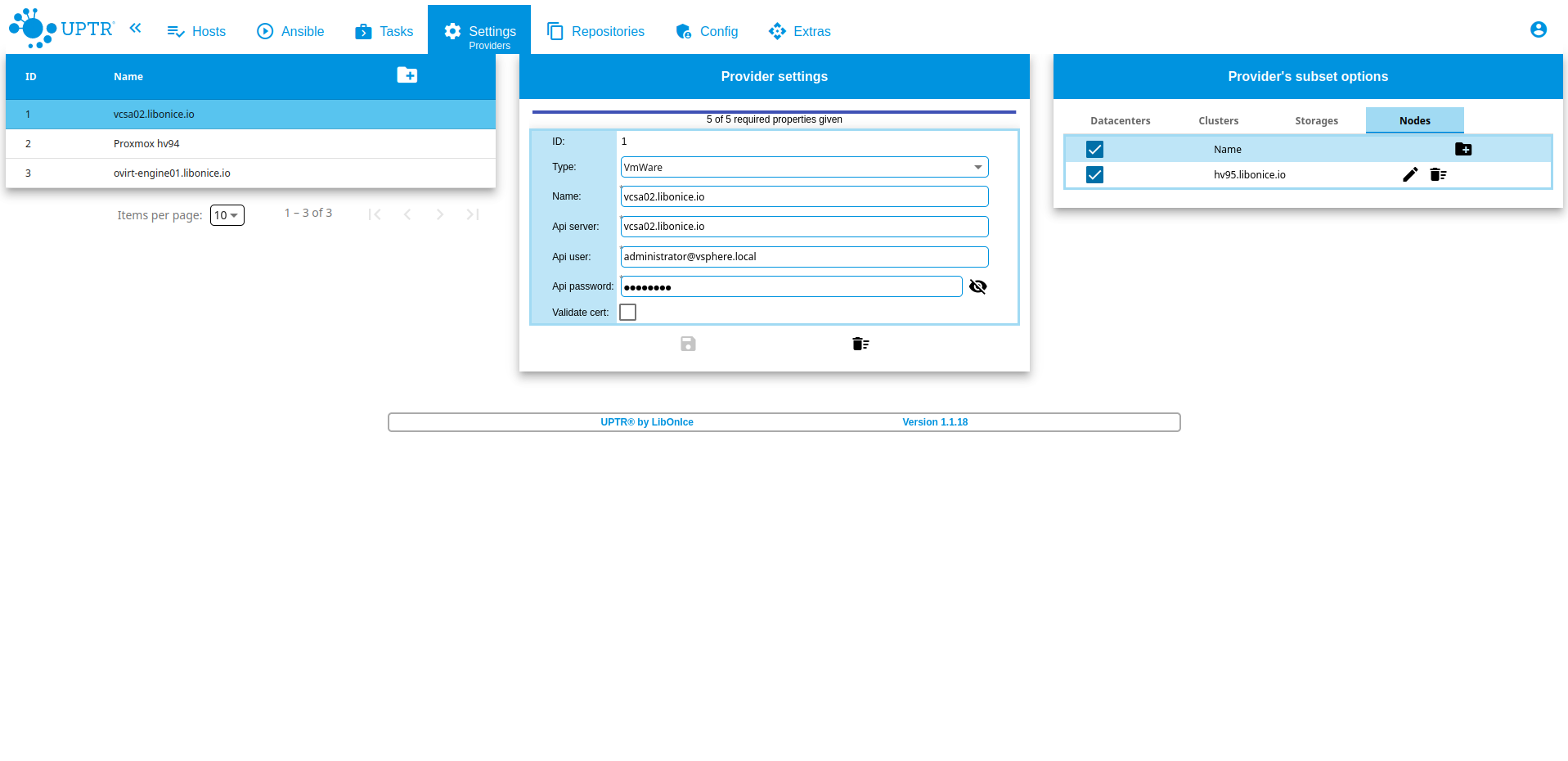
- Support for most commonly used Linux Distributions
- UPTR® is able to install multiple Linux distributions from scratch like AlmaLinux, CentOS, Debian(*), Fedora, Oracle Linux, RHEL, Rocky, SLES and Ubuntu(*)
- (*) = Available soon!
- Installation methods
- Currently supported installation methods are autoyast, kickstart and preseed
- Adaptable auto-install files and post-installation templates
- Supported Hardware and Virtualization Environments
- UPTR® can provision virtual machines within Proxmox, vSphere, oVirt and RHEV as well as on bare metal systems
- Management Flow
- Several statuses to have a seamless process flow of installation and provisioning like inventory, planned, provisioning, installed, built etc.
System Management ⬆
Manage all clients easily by using templates, static or dynamic groups, VNC connections, powerfull search- and filter tools and more.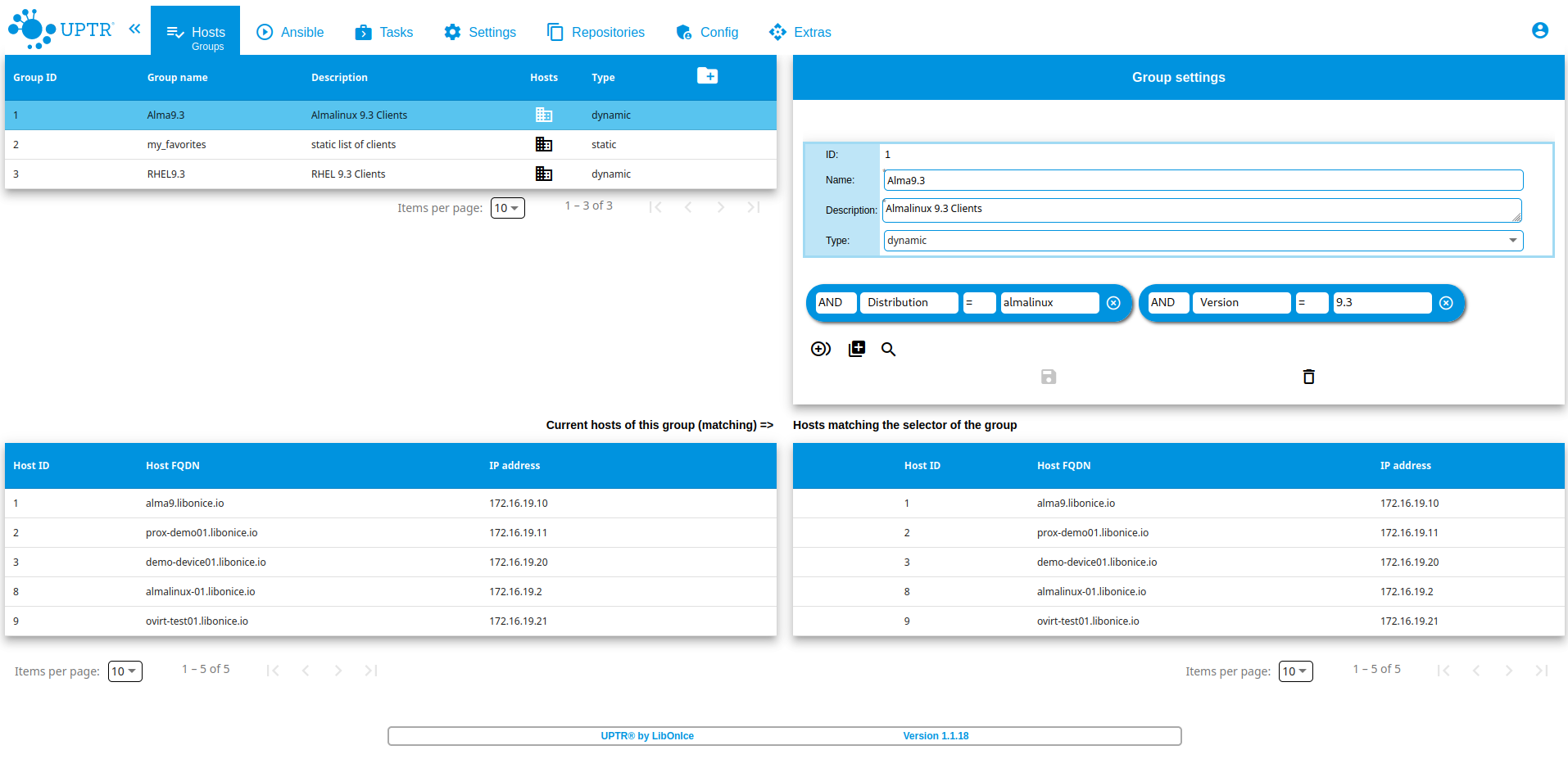
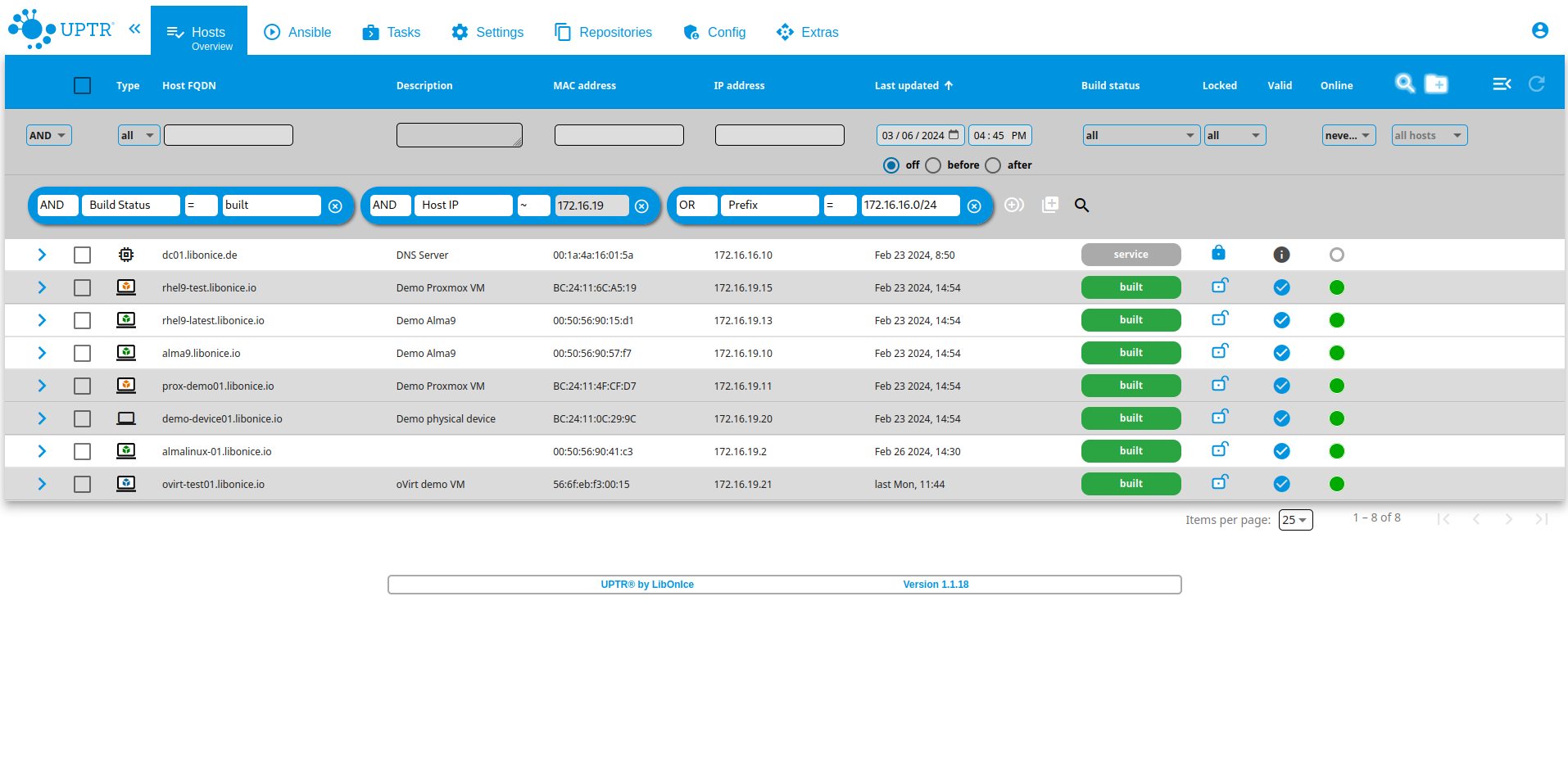
- Client VNC connect
- UPTR® supports connecting to the display of a client system in order to support the user instantly in his work environment
- Client attributes
- UPTR® is able to save global and local attributes for every single system which then can be used to perform searches or run playbooks against a defined group of clients
- Client templates and cloning mechanism
- Define complete client templates with all non-unique host details.
- Defined clients can easily be cloned with all non-unique settings.
- Host Exchange
- Transfer all non-unique properties of existing clients to another one to make client exchanges easy.
- Static and dynamic groups
- Systems can be organized in both static and dynamic groups
- Simple and extended search
- UPTR® provides a simple filter and sorting mechanism
- UPTR® provides an extended search of almost all database pattern to limit result of complex result queries
- logical combinations ( and / or / not / contains )
- save complex search patterns to new static or dynamic client groups
Repository management⬆
Choose from over 200 preconfigured Linux repositories, add your customized repositories and manage them within collections and self-defined lifecycles.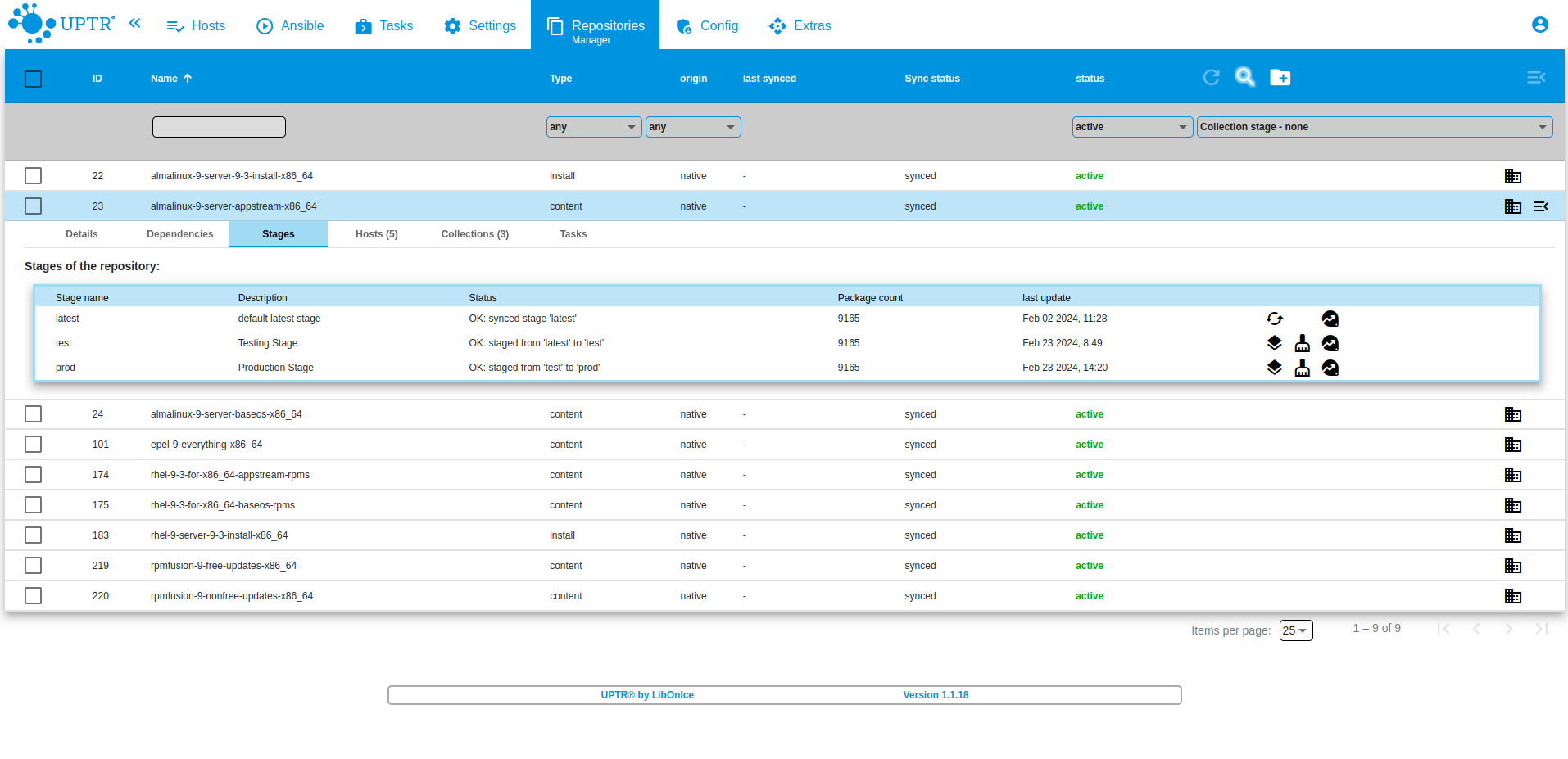
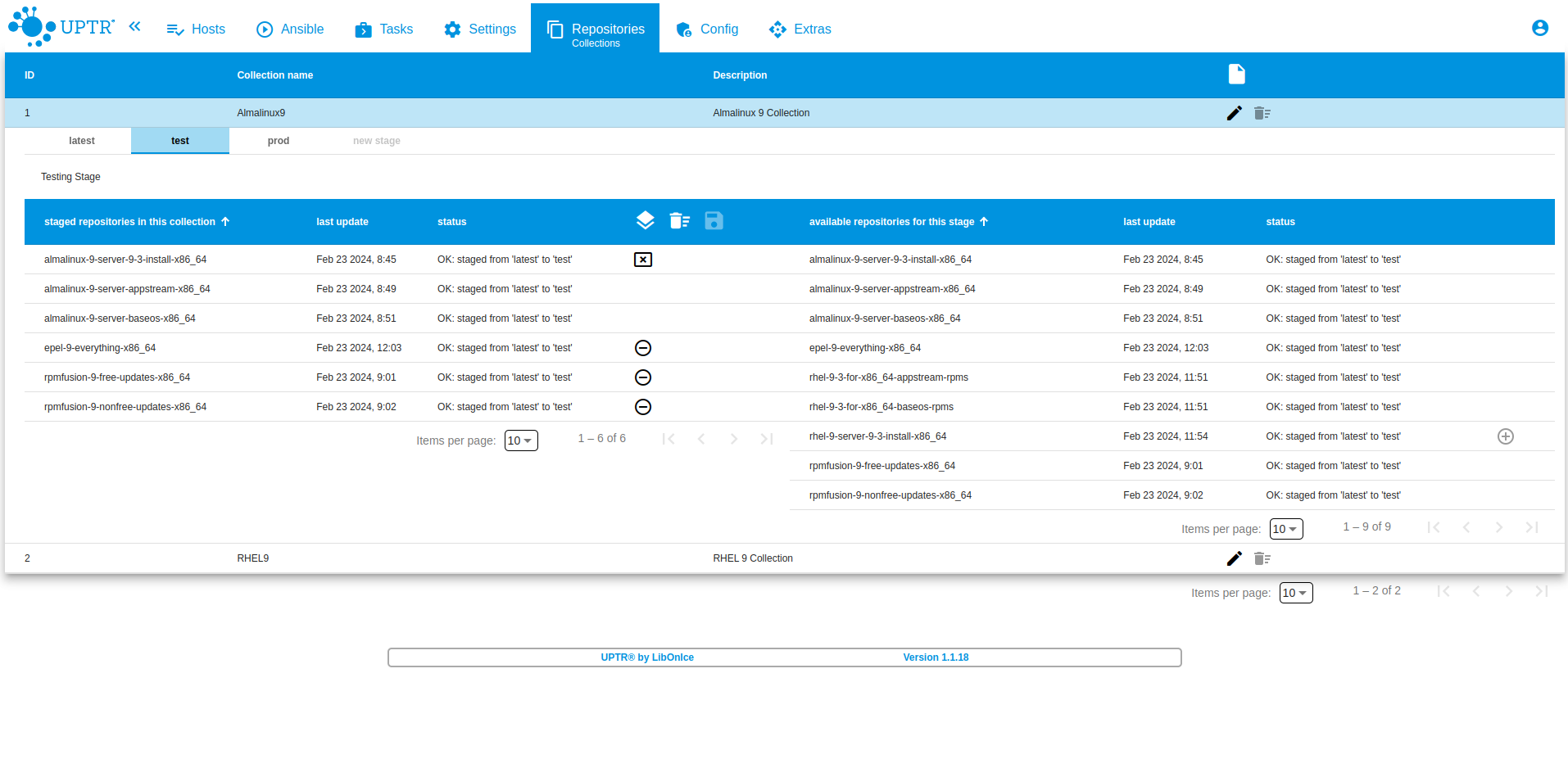
- Preconfigured repositories
- More than 200 repositories are already preconfigured and ready to use including all commonly used Linux distributions.
- Customized repositories
- There is the possibility to create and manage your own custom RPM repositories.
We are currently working on supporting DEB
as well.
- There is the possibility to create and manage your own custom RPM repositories.
We are currently working on supporting DEB
- Repository Lifecycle
- Ability to stage through self-defined statuses using your own repository lifecyle like (for example "Develop -> QA -> Production")
- Repository Collections
- Repository collections help to organize multiple repositories and stage all of them at once
Package, Patch & Errata Management⬆
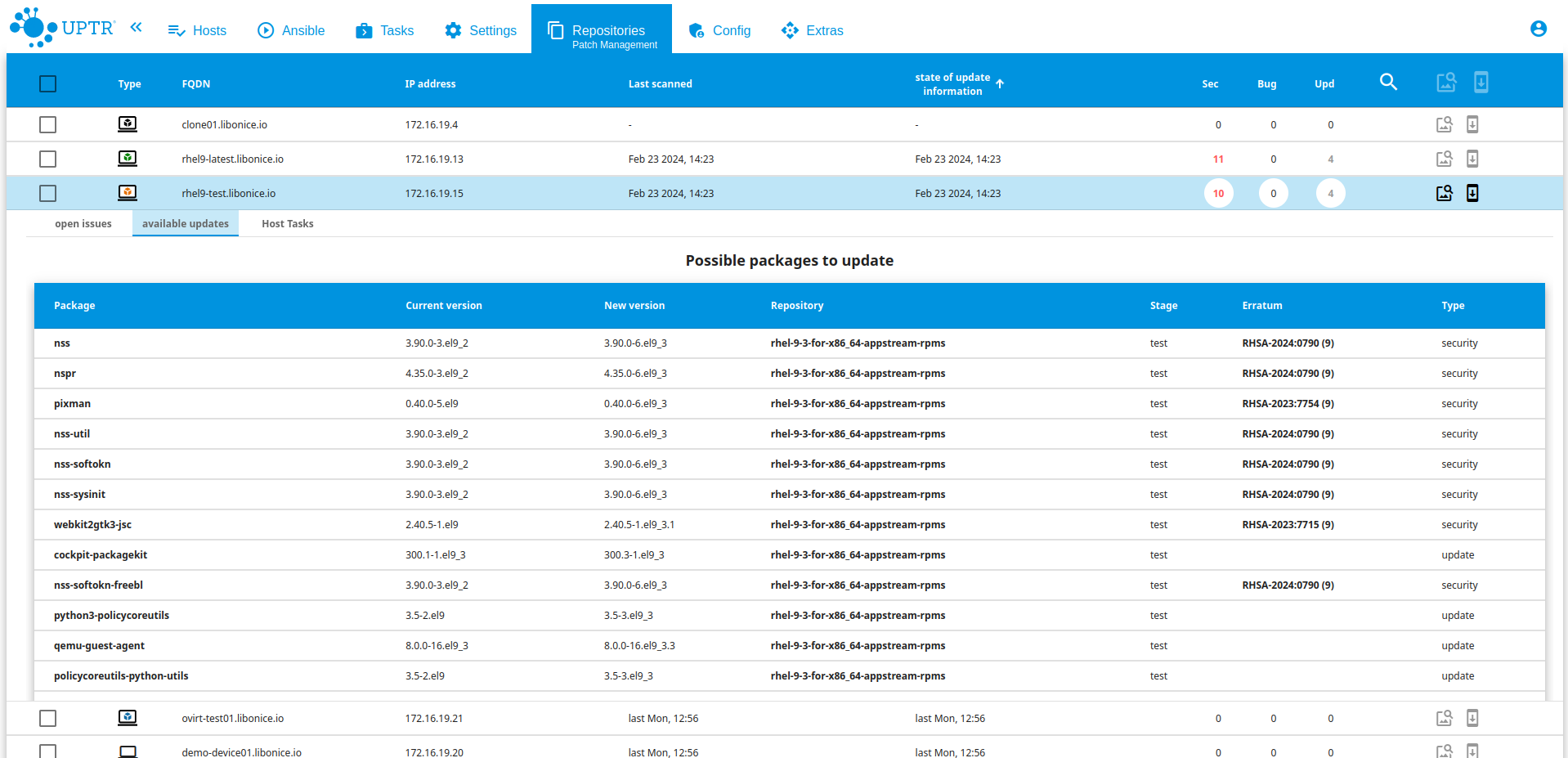
UPTR® provides a browsable package / errata manager and a clear patch management mechanism.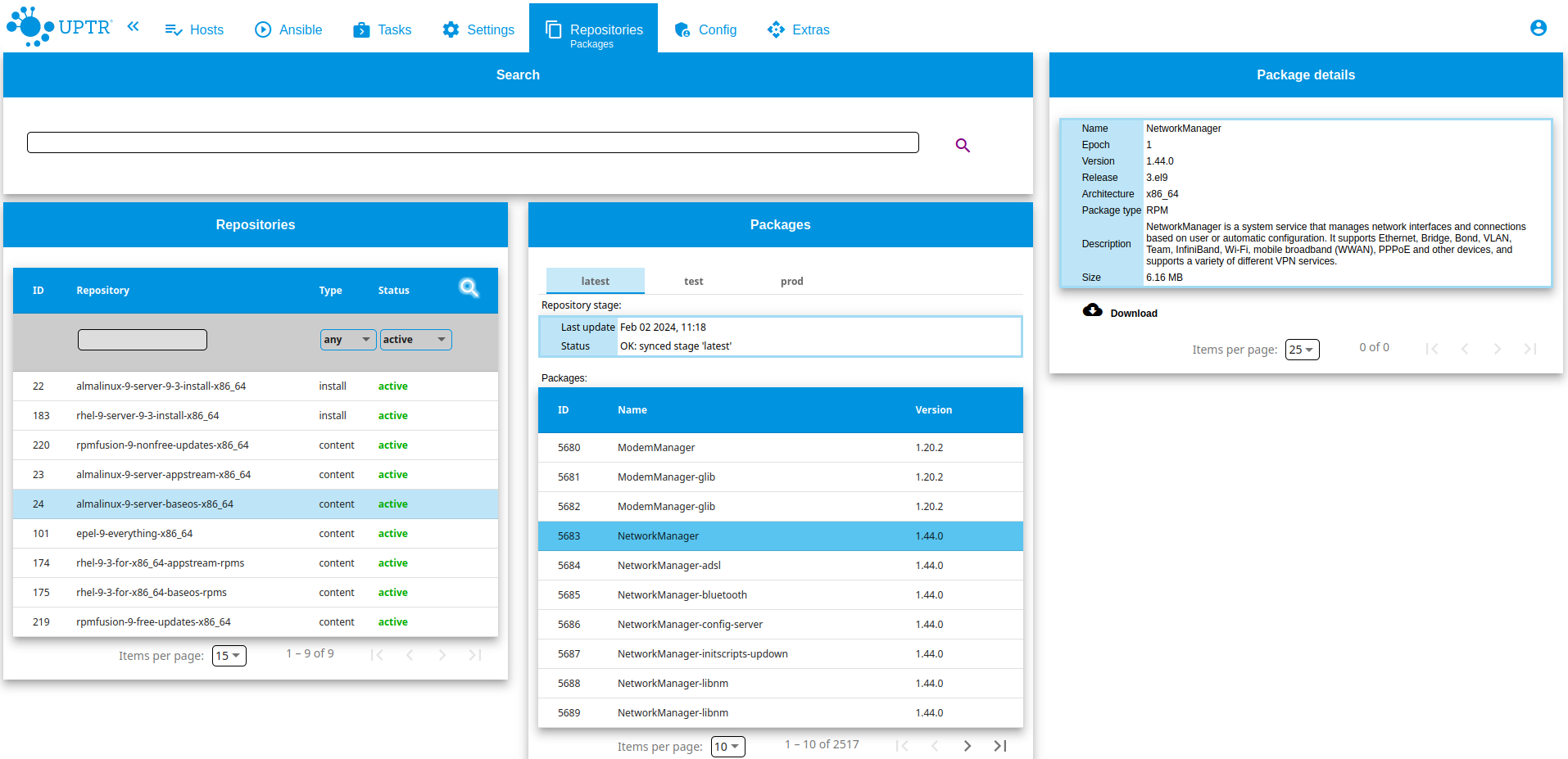
- DEB and RPM package browser
- UPTR® comes with a package browser showing detail of RPM and DEB(*) packages.
- (*) = Available soon!
- Errata information
- UPTR® provides Errata information containing details of corresponding CVE's and similar for the majority of Linux Distributions.
- Patch management
- Current and latest available packages including Errata information can be viewed and compared.
- Hosts can either be patched manually or scheduled via task manager.
Configuration Management with Ansible⬆
UPTR® includes embedded Ansible support, an online playbook editor and provides a function to collect and store Ansible facts from clients.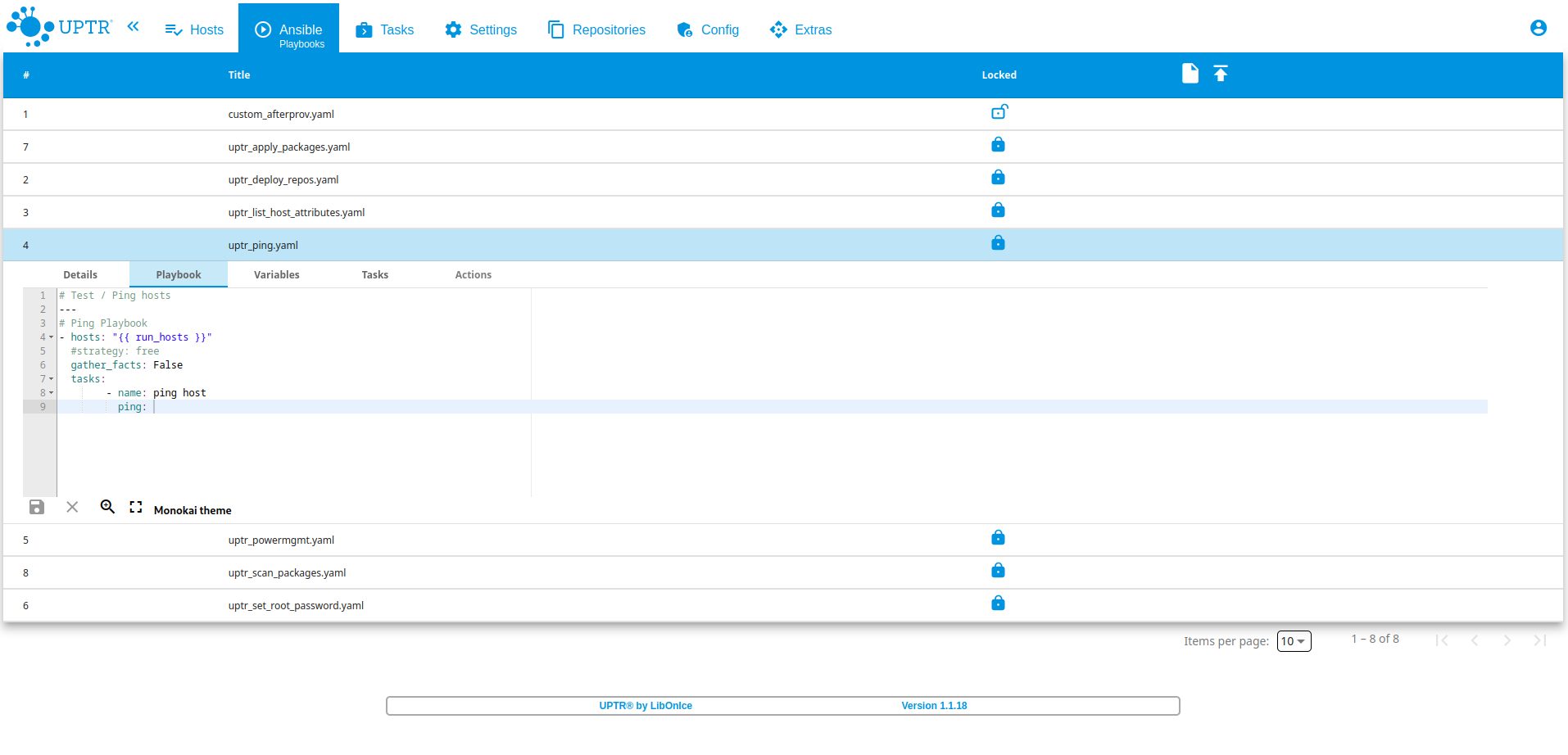
- Ansible support
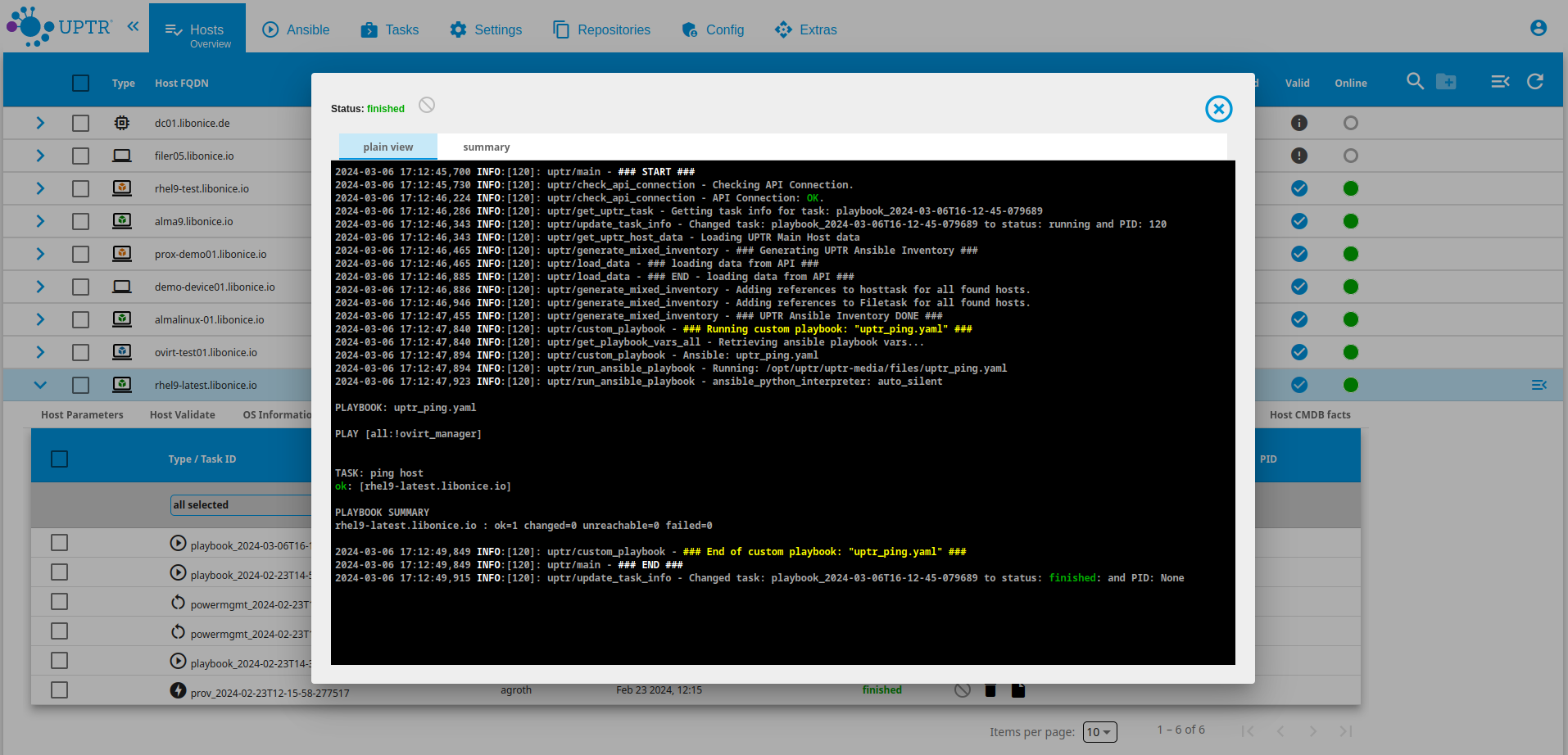
- In order to easily run playbooks or roles against specific systems, UPTR® comes with embedded Ansible support
- Playbook editor
- UPTR® contains a powerful embedded editor that makes it easy to create, edit and manage Ansible playbooks in our Web-UI
- Ansible push
- To run the playbooks against single systems, dynamic or static groups UPTR uses the regular Ansible push method.
- Ansible pull
- The Ansible Pull mechanism is used to run the UPTR® internal playbooks at thousands of systems.
- Available soon: We are currently developing a feature to also run individual Ansible playbooks or roles
- Ansible CMDB
- UPTR® is collecting and storing Ansible facts from client systems using the Ansible Pull mechanism. The Client facts can also be compared to the facts stored at UPTR® to find differences
IP Address Management with DNS and DHCP Support⬆
Integrated IPAM that provides subnet declaration and IP utilization. DNS and DHCP management support.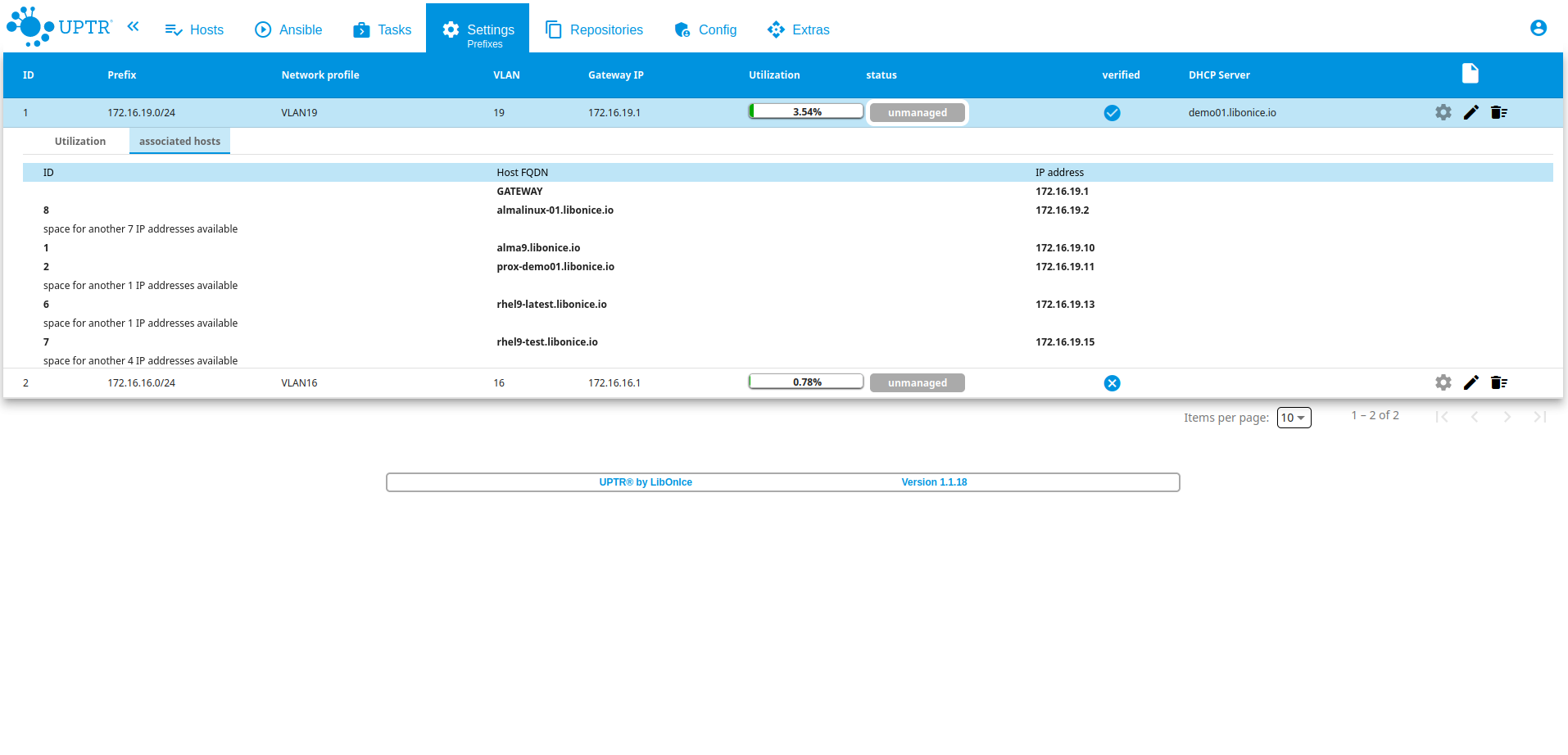
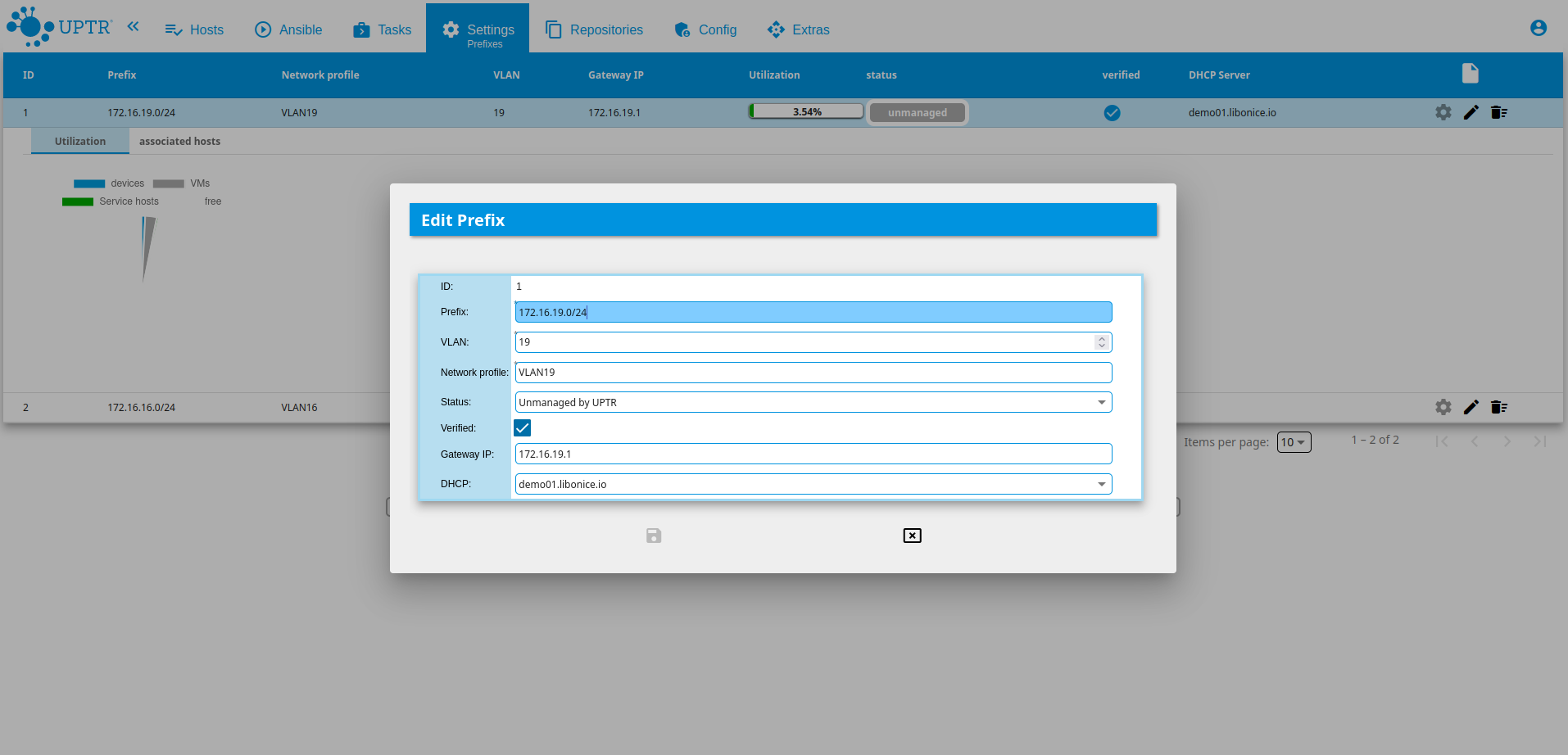
- IPAM (IP Adress Management)
- The IPAM of UPTR® provides subnet declaration including a visualization of used IPs in a specific network.
- DNS
- UPTR® enables you to create, modify and delete DNS records at ISC Bind, Active Directory and Infoblox DNS servers
- DHCP
- UPTR® can create automatically the corresponding DHCP entry through DNSMASQ and ISC DHCP while provisioning a new system
User Management⬆
User management enables administrators to grant access, manage user access and control user accounts.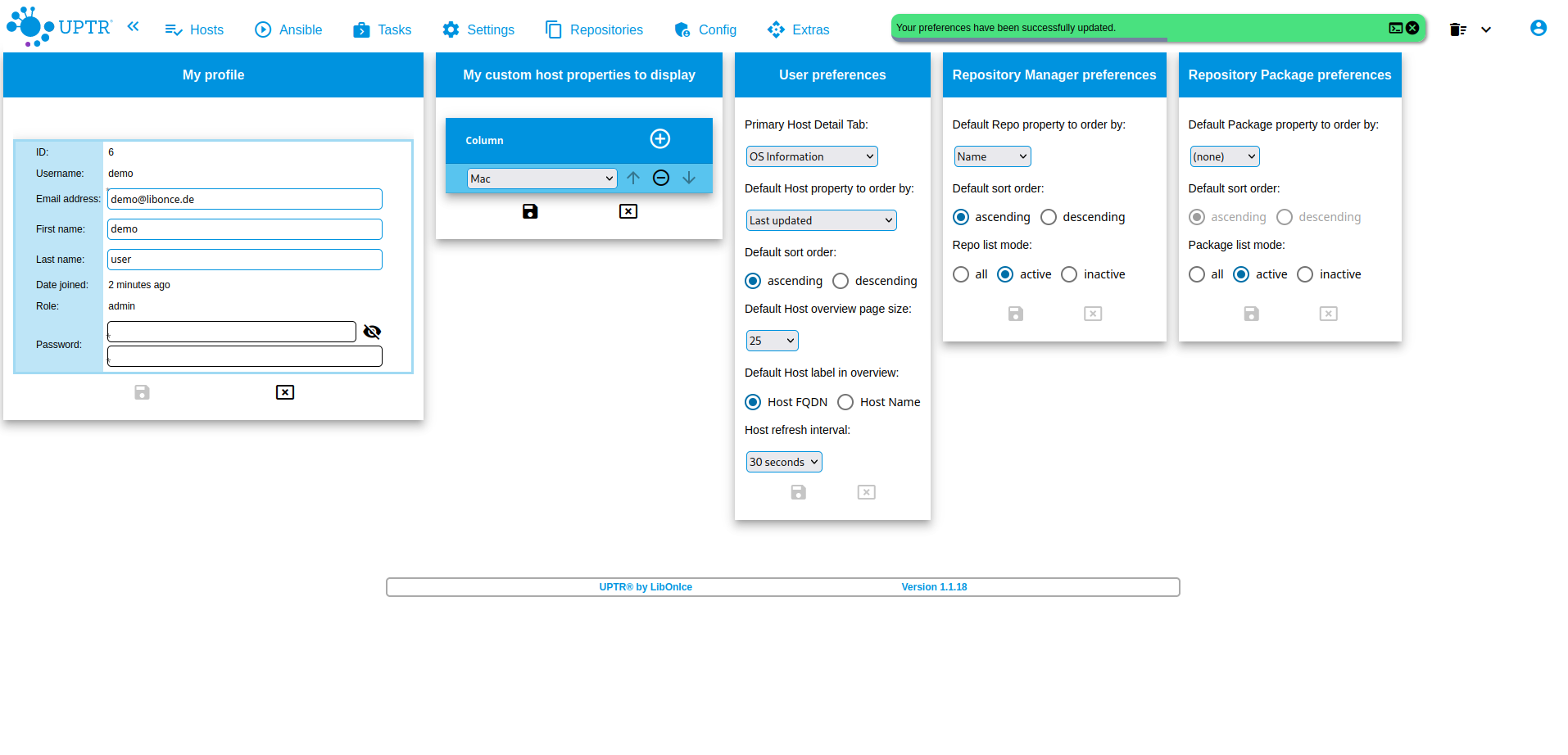
- Manage user accounts locally or via LDAP
- Four roles are available to grant different level of permissions: reader, editor, manager, admin
- Several individual user preferences and settings, can be set by any user. E.g. additional client details, refresh intervals, etc.
Task Manager⬆
Single point of view to manage all tasks - including a powerful scheduler.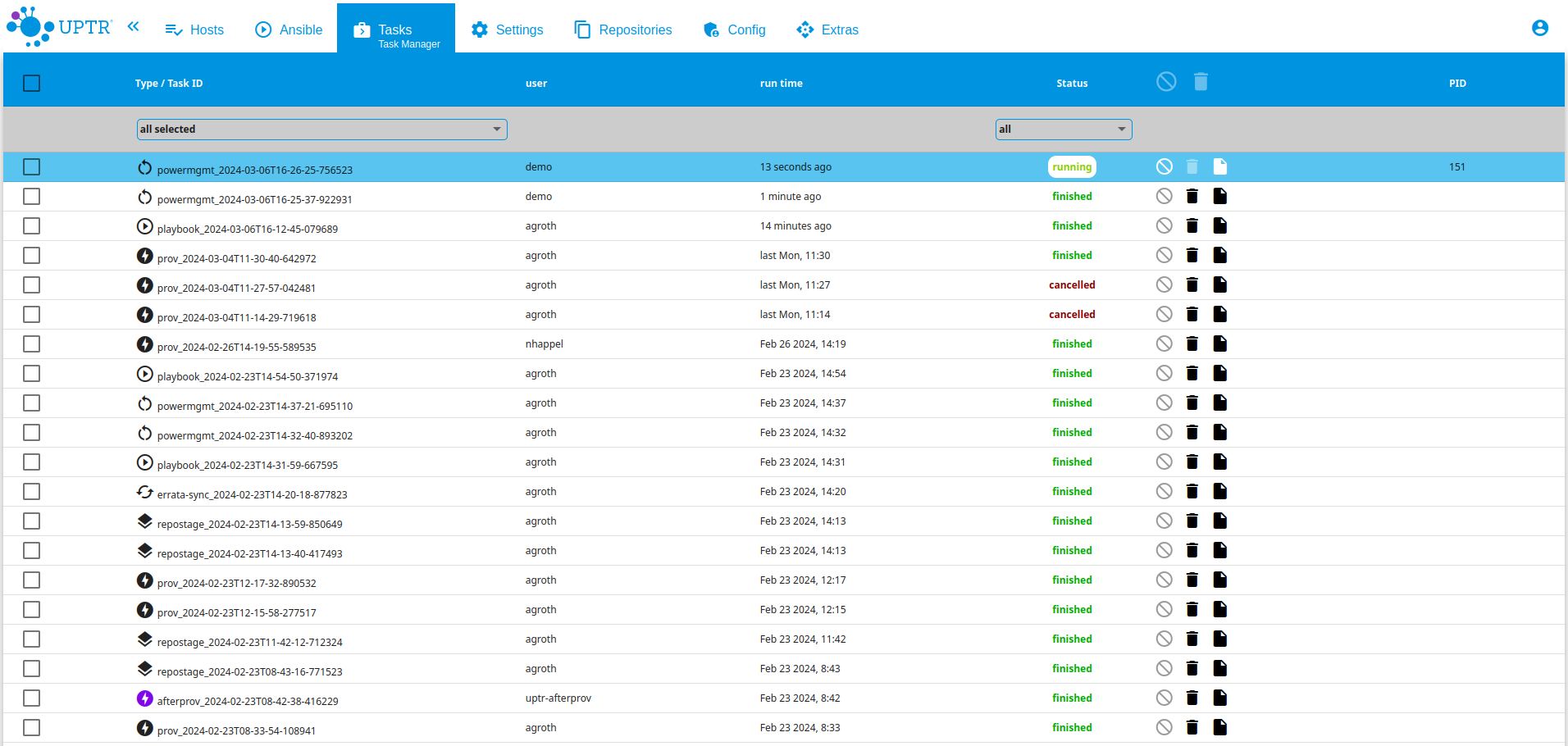
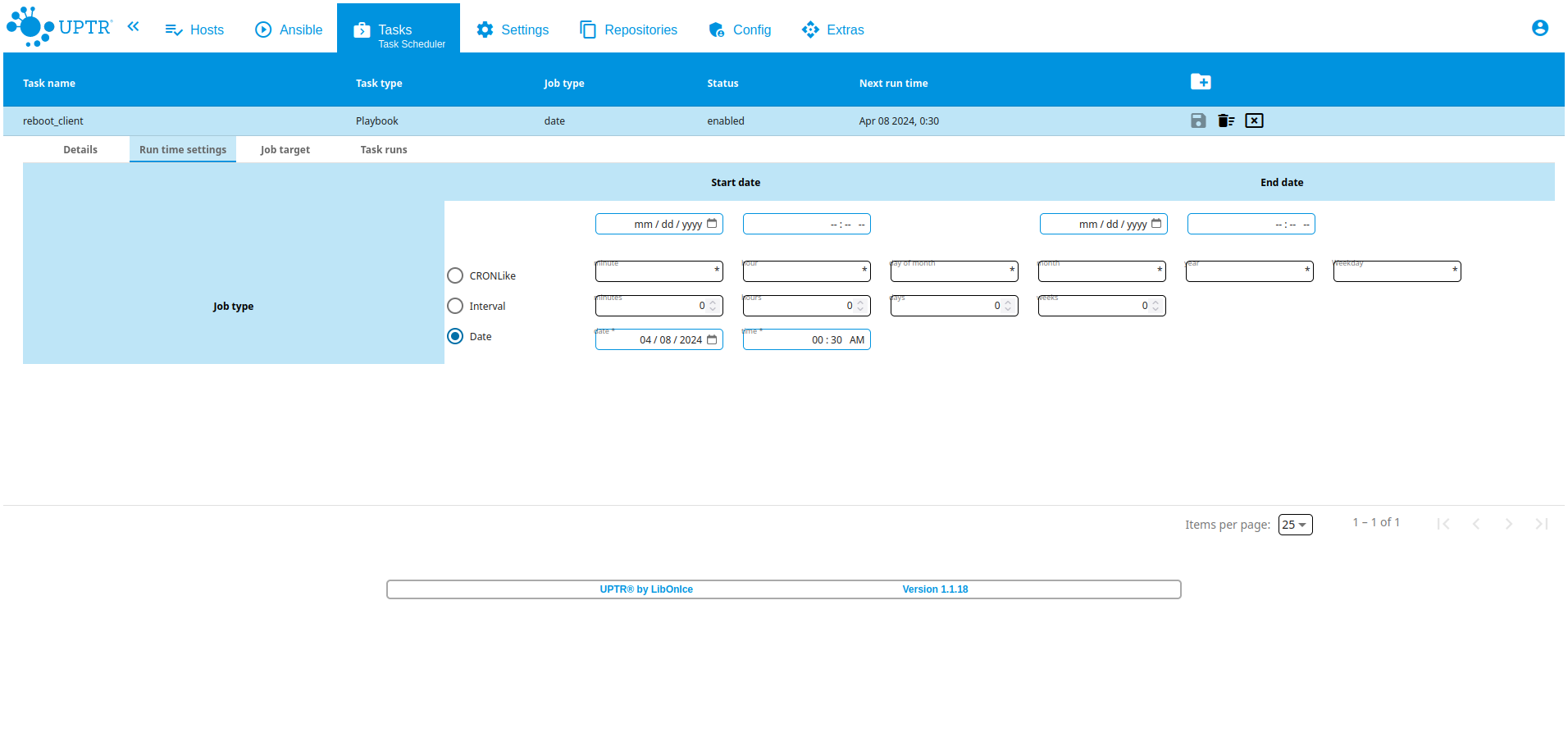
- UPTR® provides a central task manager to view or cancel all activity
- Integrated task scheduler
- Powerful quartz-like scheduler that support interval, onetime, by date and cron-like syntax
- Scheduling tasks such as provisioning, patching, repository syncing are integrated